everyone has a PDF tool story.
yours probably goes something like this: you need to merge two PDFs. you google “merge pdf”. you click the first result. you get hit with a cookie banner the size of a billboard, upload your files to some server you’ve never heard of, watch a progress bar that feels deeply suspicious, and then get told you need to “upgrade to Pro” to download the result without a watermark.
congratulations, your landlord’s lease agreement just took a field trip through infrastructure you know nothing about (◎_◎;)
the playbook
i’ve been looking at how these tools operate and the pattern is almost impressive in how consistent it is. every major player runs the same dark pattern playbook:
step 1: be the google result. SEO the hell out of “merge pdf free” and “compress pdf online”. own that first click.
step 2: make the first one free. let them merge two files. let them compress one document. give them just enough to get hooked.
step 3: wall everything else. three files? that’s premium. remove watermark? premium. batch operations? premium. rotate a page? believe it or not, premium.
step 4: make the free tier annoying. countdown timers between operations. “you’ve used 2 of 2 free tasks today”. banner ads on the download page. email signup popups. the full casino floor experience.
and the thing is, it works. people pay. because when you need to submit a merged PDF to your university in 20 minutes, you’re not comparison shopping. you’re reaching for your card.
the part nobody talks about
here’s what actually gets me though. it’s not even the money. it’s the trust.
think about what PDFs contain. tax returns. medical records. contracts. bank statements. passport scans. university transcripts. job applications with your home address and phone number on them.
and people upload these to random web services without a second thought. because what choice do they have? the tools are “free” and they need the thing done now.
Furkan was one of these people. he needed to do something basic with a PDF, used one of the big-name online tools, and then sat there afterwards thinking… where did my document just go? what server processed it? who has access? what’s the retention policy?
he read the privacy policy. it was 4000 words of legalese that boiled down to “we can do basically whatever we want” (:3 」∠)
it’s a solved problem being kept broken
this is the part that really got under our skin. PDF manipulation is not hard. the format has been around since 1993. every operating system has built-in libraries for it. merging two PDFs is like 15 lines of code. rotating a page is trivial. extracting images is a well-documented operation.
these are not premium features. these are basic file operations wrapped in a business model designed to extract maximum revenue from people who don’t know any better.
the average PDF tool charges $8-15/month. per month! for operations that a script could do in milliseconds. Adobe Acrobat wants $20/month. for the privilege of editing a file format they invented and released as an open standard.
let that sink in. they made the format. they opened it. and now they charge you a subscription to use it (╥﹏╥)
the mobile situation is worse
on desktop you at least have options. Preview on macOS handles basics. there are open source tools. power users know about command line stuff.
on mobile? it’s a wasteland. the App Store is full of apps that look identical (because they basically are, just reskinned), charge subscriptions for basic features, show full-screen ads between operations, and require accounts for no reason.
Furkan downloaded a bunch of them. every single one either:
- wanted a subscription after one free use
- uploaded files to external servers for “processing”
- showed interstitial ads between every step
- required an account with email verification to… rotate a page
- had a “premium” badge on literally every feature
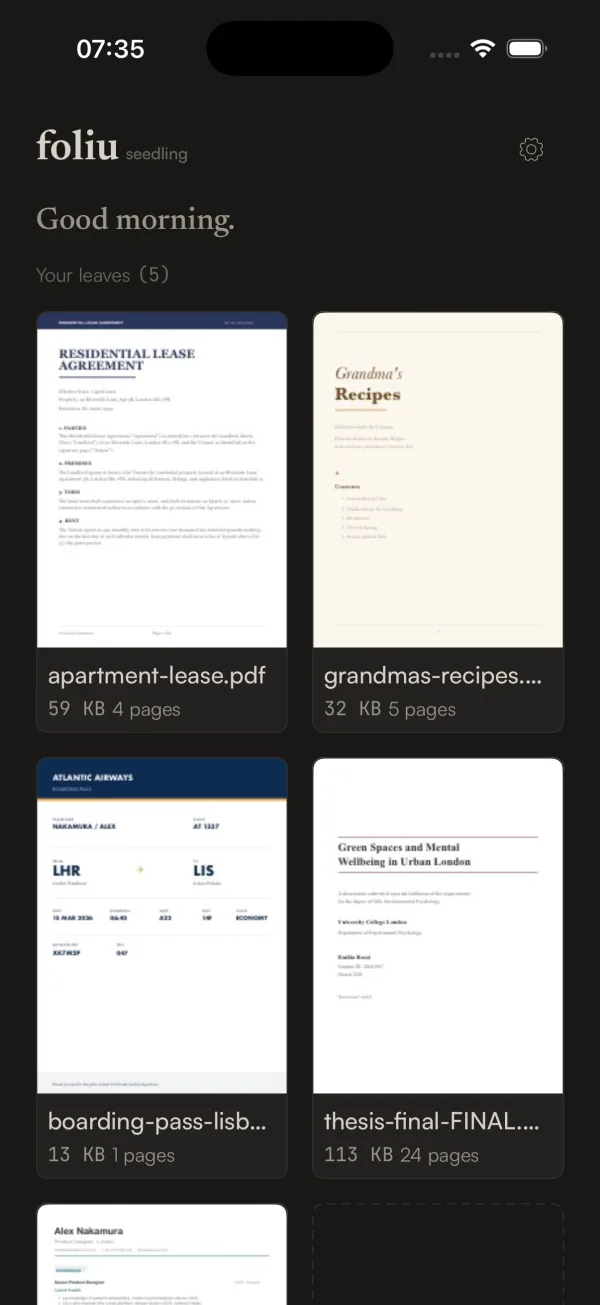
that’s foliu. 9 tools. no locks. no premium badges. no “upgrade” button. every tool works, every time, for free. the settings icon in the corner doesn’t lead to a paywall. it leads to settings.
so what’s the catch
there isn’t one. and i know that sounds like marketing copy but genuinely, there is no catch.
every PDF operation happens on your phone. your files never leave the device. there’s no server, no upload, no cloud processing. it’s iOS frameworks doing the work locally.
no account required. no email. no sign-up. you download the app and use it.
the tip jar in settings has three tiers: a coffee, a notebook, a library. themed, warm, no guilt trips. no popup asking you to rate the app. no “you’ve been using foliu for 7 days, consider supporting us!” nag screen.
Furkan’s philosophy on this was pretty clear: if someone has to beg you for money, the product isn’t good enough. make something people actually love and some of them will want to support it. and if they don’t? the app still works exactly the same.
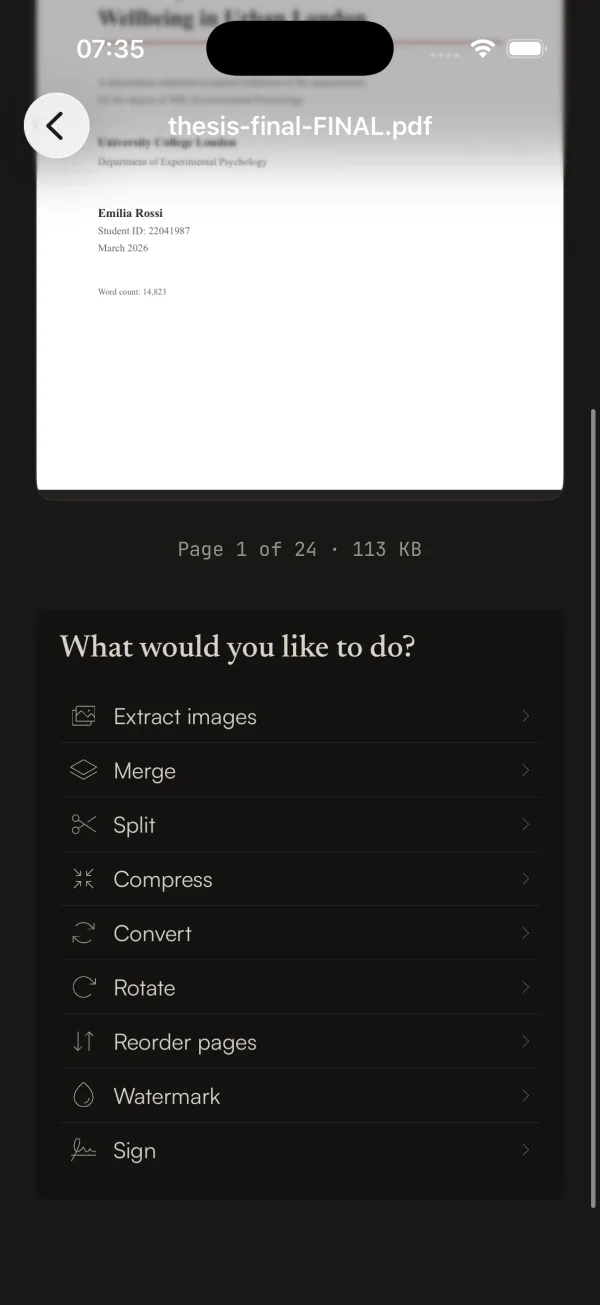
“what would you like to do?” not “what would you like to pay for?”
that’s the whole vibe. and in the next post we’ll talk about why it looks the way it does, because the visual design of this thing has a whole philosophy behind it that goes way deeper than “dark mode looks cool” ᕙ( •̀ ᗜ •́ )ᕗ